分子を設計し、
まだない機能を創る。Design molecules.
Create new functions.
分子レベルの設計と有機合成を通じ、最先端の有機機能分子の創出を目指します。We seek to create advanced functional organic molecules through molecular-level design and synthesis.
「こんな機能分子があったら面白い。」
その好奇心から、研究を始めよう。What if we could create a molecule that does something extraordinary?
分子レベルの設計・合成から、発光・液晶・結晶・色素・センシングへ。京都工芸繊維大学で、分子の可能性を一緒に探究しませんか。From molecular design and synthesis to luminescence, liquid crystals, crystals, functional dyes, and sensing. Explore the chemistry of functional molecules with us in Kyoto.
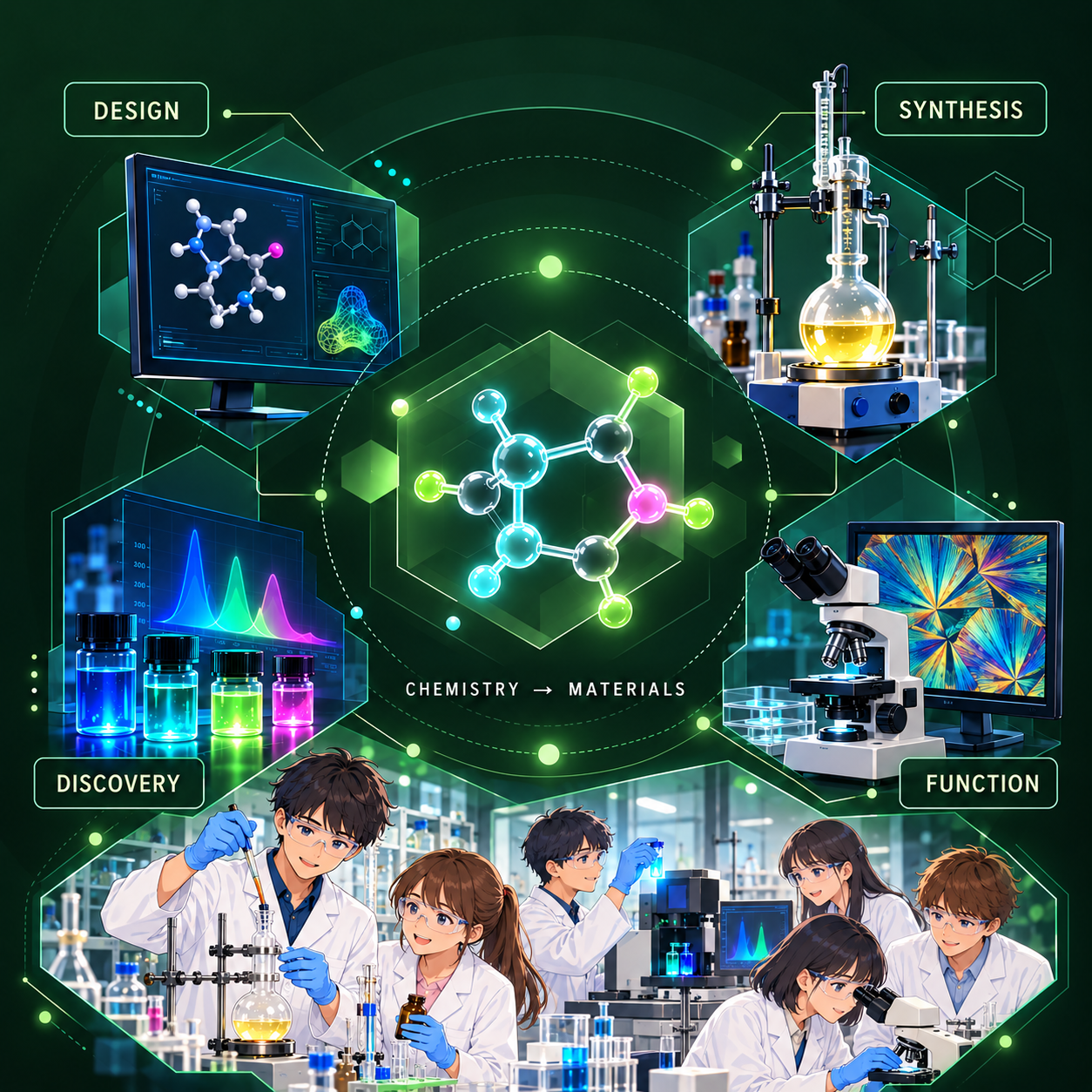
分子の構造を工夫し、物質に新しい働きを持たせる。好奇心と実験を出発点にした研究を大切にします。We value curiosity-driven chemistry: imagining useful or intriguing molecular functions and testing ideas through careful experiments.
分子レベルの設計と有機合成を通じ、最先端の有機機能分子の創出を目指します。We seek to create advanced functional organic molecules through molecular-level design and synthesis.
「こんな分子があったらいいな」という問いを大切にし、自ら考え、議論し、手を動かす研究を進めます。A question as simple as “Wouldn't it be interesting if this molecule existed?” can inspire meaningful research.
含フッ素分子の設計・合成を基盤に、発光をはじめとする光機能材料や液晶材料の創製に取り組みます。We design and synthesize fluorinated molecules and develop photofunctional materials and liquid-crystalline materials.
研究テーマを見るResearch themes ↗含フッ素分子を含む有機分子を対象に、結晶工学と分子集合の観点から、分子の配列・集合と材料機能の関係を探究します。We study fluorinated and other organic molecules through crystal engineering and molecular assembly to explore how molecular organization influences material properties.
研究テーマを見るResearch themes ↗研究の進行イメージ。実際のテーマや実験内容は、研究の進捗に合わせて個別に相談します。An example of the research cycle. Specific topics and experiments are discussed with the supervisors as projects develop.
先行研究を読み、どんな分子や機能が必要か考えます。Read the literature and identify an interesting molecular challenge.

分子を設計し、適切な安全管理の下で合成・評価します。Design, synthesize, and characterize molecules under appropriate safety procedures.

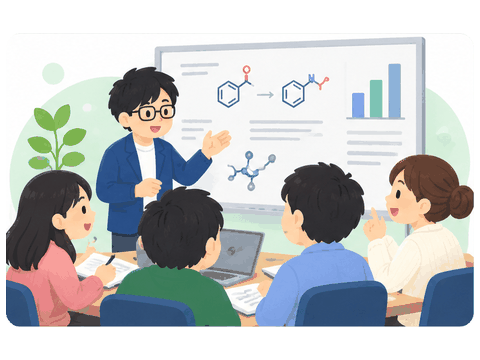
CR・CTで考察を深め、次の実験計画につなげます。Discuss results in research meetings and journal sessions to plan the next step.
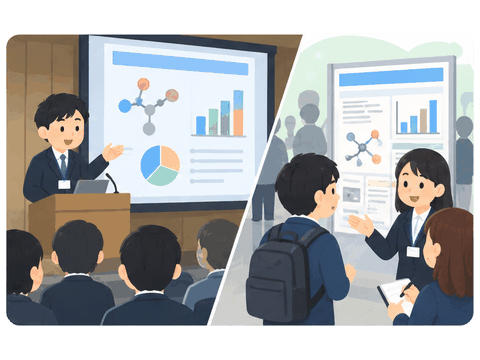
研究の進捗に応じて、学会発表や学術論文を目指します。When results are ready, aim for conference presentations and peer-reviewed publications.
※ 研究内容や発表機会は、進捗・テーマ・安全面などにより異なります。* Project activities and presentation opportunities depend on progress, topics, and safety considerations.
研究の進捗を共有し、新しい論文に触れ、安全に実験を進めることを大切にしています。We emphasize regular dialogue, keeping up with current literature, and a responsible, safety-first approach to experimental work.

おおむね隔週。研究の背景・目的、これまでの結果、前回からの進捗、次の計画を発表・議論します。Typically about every two weeks. Members share the background, results, progress, and next steps of their work.

前期・後期それぞれ3回を基本に、有機合成および有機材料に関する過去2年以内に発表された研究論文を取り上げ、その背景・目的、結果、考察、結論を紹介・議論します。In principle, three sessions are held each semester. We present and discuss research papers in organic synthesis and organic materials published within the past two years, covering their background, objectives, results, discussion, and conclusions.

国内・国際学会での口頭発表やポスター発表、学術論文の投稿を通じて、研究成果を発信することを目指します。We aim to communicate our research findings through oral and poster presentations at domestic and international conferences, as well as submissions to academic journals.
研究室では、安全をすべての実験活動の基本としています。実験を始める前に化学物質の危険性や安全データシート(SDS)を確認し、適切な保護具や実験設備を使用します。実験計画については事前に教員と相談し、単独実験や深夜実験を行わないことを原則としています。研究室に配属された学生には、安全教育を実施するとともに、研究室内の安全マニュアルに基づいて実験を進めるよう指導しています。Safety is fundamental to all research activities in our laboratory. Before starting experiments, we assess chemical hazards, consult safety data sheets (SDS), and use appropriate protective equipment and laboratory facilities. We discuss experimental plans with supervisors in advance and, as a rule, do not conduct experiments alone or late at night. Students joining the laboratory receive safety training and are instructed to carry out their work in accordance with the laboratory’s internal safety manual.
※ 運営の細部・予定・活動時間は、年度や授業・研究内容に応じて案内します。* Detailed procedures, schedules, and operating arrangements may be updated from year to year.
本学の学生だけでなく、他大学・高専や海外から進学を検討する方にも、研究内容についての事前相談をおすすめします。We welcome inquiries about research fit from students considering graduate study, including those at other universities and institutions abroad.
有機合成・分子設計・機能性材料などを学び、研究に取り組みたい方。For students interested in organic synthesis, molecular design, and functional materials.
自分の研究課題をさらに発展させ、独創的な成果の創出を目指す方。For researchers hoping to develop original projects and contribute new knowledge.
出願資格、研究テーマの適合性、研究指導言語、受入可能性を事前に確認してください。Please discuss research fit, eligibility, language of supervision, and availability before applying.
募集要項を読む前に、主な入試区分と選考方法の全体像を確認できるようにまとめました。A practical overview of common admission routes before consulting the current official application guidelines.
| 課程Program | 入試区分Route | 概要・選考方法Overview & selection | 事前準備のポイントWhat to prepare |
|---|---|---|---|
| 博士前期課程 (修士課程)Master's program | 一般入試Regular admission | 学力検査と出願書類などにより選抜。大学全体では年3回の実施が案内されていますが、対象専攻・入学時期によって実施状況が異なります。Selection uses examinations and application documents. KIT describes three rounds per year overall, but availability differs by department and intake. | 志望専攻の試験科目、研究計画・成績証明書等の提出書類、TOEIC利用の有無を確認。Check departmental exams, documents, and any TOEIC requirements. |
| 博士前期課程 (修士課程)Master's program | 推薦・自己推薦等Recommendation / self-recommendation | 大学卒業見込者・高専専攻科修了見込者等を対象とする推薦入試があります。自己推薦は実施専攻が限られ、全専攻共通ではありません。Recommendation-based options exist for eligible university or advanced-college applicants. Self-recommendation is available only in designated departments. | 在籍校からの推薦条件と志望専攻での実施有無を早期に確認。Verify institutional recommendation criteria and departmental availability early. |
| 博士前期課程 (修士課程)Master's program | 社会人・外国人留学生特別入試Special admission for working professionals / international students | 該当する出願資格を持つ方を対象とした別区分。選抜は学力検査や書類選考などで行われます。Separate selection routes for eligible working professionals and international students, involving examination and document review. | 在留資格・学歴・語学資格・試験言語など、各区分の条件を確認。Check eligibility, language and test requirements, and relevant applicant documents. |
| 博士後期課程Doctoral program | 一般入試・社会人/外国人留学生特別入試Regular / special admissions | 大学は博士後期課程の一般入試を年2回案内しています。春・秋入学の可否や選抜内容は専攻・区分で異なります。KIT describes two regular doctoral admission rounds per year, plus special routes. Spring or fall entry and assessment vary. | 指導希望教員と研究内容・受入可否を相談し、研究計画や必要書類を準備。Discuss the proposed research and possible supervision; prepare a research plan and required documents. |
| 国際大学院プログラム (IGP)International Graduate Program (IGP) | 別途の英語プログラムSeparate international program | 原則として英語で授業・研究指導を実施する制度。一般の日本語による大学院入試とは、応募資格や手続きが異なります。A separate route where classes and research supervision are in principle provided in English. Eligibility and procedures differ from ordinary Japanese-language admission routes. | 2027年秋入学の公表条件には、出願前の希望指導教員への連絡とCEFR B2以上を証明できる英語試験が含まれます。当研究室での対応・受入は要相談。For Fall 2027, KIT specifies contacting a preferred supervisor and documenting English proficiency at CEFR B2 or higher. Lab eligibility and supervision availability must be confirmed. |
本文・表は大学公表情報を分かりやすく要約したものです。正式な出願要件・募集人数・締切日は大学の募集要項が優先します。制度の変更に伴い、毎年度の再確認をおすすめします。This table summarizes published university information for orientation only. Official guidelines govern eligibility, quotas, examinations, and deadlines. Verify the latest details for each admission year.
研究室見学や進学に関する相談は、まず希望する研究テーマと簡単な自己紹介をメールでお知らせください。For a lab visit or prospective study, email a brief introduction and a description of your research interests first.
有機フッ素化学・機能性有機材料・発光・液晶・機能性色素などに関心のある方。For interests in organofluorine chemistry, functional organic materials, photoluminescence, liquid crystals, and dyes.
syamada@kit.ac.jp結晶工学・有機結晶・π共役分子・分子集合などに関心のある方。For interests in crystal engineering, organic crystals, π-conjugated molecules, and molecular assembly.
mmorita@kit.ac.jp研究紹介を読み関心を整理Identify your areas of interest
氏名・所属・希望課程・時期を伝えるShare your affiliation, program, and timing
訪問またはオンライン等を相談Arrange a visit or online meeting if feasible
出願資格・試験・期限を確認Check the current formal requirements
件名:研究室見学・大学院進学相談(所属大学・氏名)

山田先生/盛田先生

突然のご連絡失礼いたします。
〇〇大学〇〇学部〇年の[氏名]と申します。
貴研究室の[関心のあるテーマ]に興味があり、
大学院進学および研究内容についてご相談したく、ご連絡いたしました。

希望課程:博士前期課程/博士後期課程
入学希望時期:20XX年4月/秋
関心のある研究内容:[2〜3文程度]
研究室見学の希望:対面/オンライン/未定

お忙しいところ恐れ入りますが、
面談・研究室見学の可否をご教示いただけますと幸いです。

[氏名・大学・学部/研究室・メールアドレス]
Subject: Prospective graduate student / lab visit — [Name, University]

Dear Professor Yamada / Assistant Professor Morita,

My name is [Name], and I am currently studying at [University / Department].
I am interested in your research on [topic], especially [brief reason].

Intended program: Master's / Doctoral
Preferred enrollment: [Month, Year]
Academic background: [Your major and current research]
Research interests: [Two or three sentences]
Meeting preference: On-campus / Online / Either

Would it be possible to discuss potential research opportunities and the possibility of visiting your laboratory?

Thank you for your time and consideration.
Best regards,
[Name / University / Email]
※ 見学は予約制を想定した提案です。実施・受入の可否は教員との調整によります。面談は合格や研究指導の受諾を意味するものではありません。* Visits and online meetings are subject to arrangements with a supervisor. A meeting does not constitute an admission offer or confirmation of supervision.
研究内容への関心があれば、まずは相談から。Interested in our science? Start by getting in touch.